I played a lot of Donkey Kong during Covid. Specifically Donkey Kong Country. Yes, the Super Nintendo videogame from 1994.
My husband and I were newlyweds and rode out the end of the pandemic living in my parents’ house. It was a trove of technology through the ages. It had every video watching apparatus since video discs and video game consoles from ColecoVision to X-Box 360.
No system or game was more nostalgic for me than Donkey Kong Country on Super Nintendo. My mom’s cousin would visit every summer, and without fail, we would spend a few of our previous hours with him trying advance our progress.

I had never been particularly good at it, but remembered it being challenging and fun. So my husband Alex and I decided to spend some of our many free hours recapturing some of that childhood magic. We would open a craft beer, put on a Billie Eilish playlist, and try to make it to the next save point - usually unsuccessfully.
It was on one of these evenings that Alex first commented on my reaction when I made a mistake in the game. When I failed to dodge a dangerous creature or missed a jump, I would apologise and say something along the lines of “I’m so sorry that I suck so badly at this”. And he would often respond with something along the lines of “It is hard! I think you’re doing great!” or “The point is just for us to have fun together!” As time went on, his response shifted to “You don’t have anything to apologise for. You’re not doing it on purpose”.
His commenting on my response to losing a level encouraged me to pay closer attention to his response when he made mistakes in the game. Without fail, he would laugh - sometimes in frustration, but most often with untainted glee - and exclaim “Oops!”
I found this response baffling. Don’t you feel guilty for losing? I would think to myself. Eventually, I asked him this question directly. He plainly said: “No, I didn’t do it on purpose. I don’t think I need to feel guilty for unintentionally falling off the edge”.
“Right, but you can still feel guilty for the consequences, whether the action was intentional or not”, I said to him, with more frustration than I would like to admit. To be honest, I don’t remember if he said anything more, but I took some time to consider what he was proposing. In this example, the “consequences” were that we would have to play that level, or a set number of levels since the last save point, again. The main consequence that I was contemplating was spending more quality time together.
Through this slow investigation into his feelings around his own mistakes, I learned that my response to losing - to my own perceived ‘failure’ - wasn’t really about the action or the consequences. It was about how I believed that those mistakes reflected my innate worth.
I responded as I did because I was internalising what each and every action, and its consequence, revealed about who I am as a person. I had, for my whole life, been counting any mistake as a mark of moral failure.
I did this to protect myself. I believed that if I was hard on myself for any misstep, the desire to avoid my own wrath would be strong enough to keep me from repeating that mistake or making any other mistakes.
Taking ‘accountability’ for my every action by attributing what I call ‘the language of responsibility’ to it was a system that I devised and that served my desire to avoid others’ criticism. It was how I took it upon myself to nip any undesired behaviour in the bud.
But I trusted this system so much that I allowed it to infiltrate my whole life. Self-criticism became my developed instinctual response. And it wasn’t until I let someone see into that system that I realised that it wasn’t the only way. It was just the only way that I knew.
I can identify three key elements that helped me move from blaming myself for my every mistake to acknowledging mistakes for what they are:
Grace - Having reasonable expectations for myself
Buy In - Voices around me choosing not to assign blame when mistakes happen
Perspective - Treating mistakes according to their gravity
Grace
I first had to see that I was trying to hold myself to an unattainable standard - perfection. I believed that in every moment either success or failure was possible and if I didn’t succeed it was because I was the problem.
I didn’t believe that I was allowed to make mistakes. I’m not sure I even believed in mistakes. I thought that every misstep or failure reflected an area of my life where I lacked discipline or skill. My ‘mistakes’ were just failures. Failing to work hard enough, pay enough attention, listen well enough, be diligent enough, brave enough, talented enough, quiet enough. Flawless.
I was trying to attain perfection through self-criticism. I was trying to meet an impossible standard. And once that became clear to me, I could have more grace for myself.
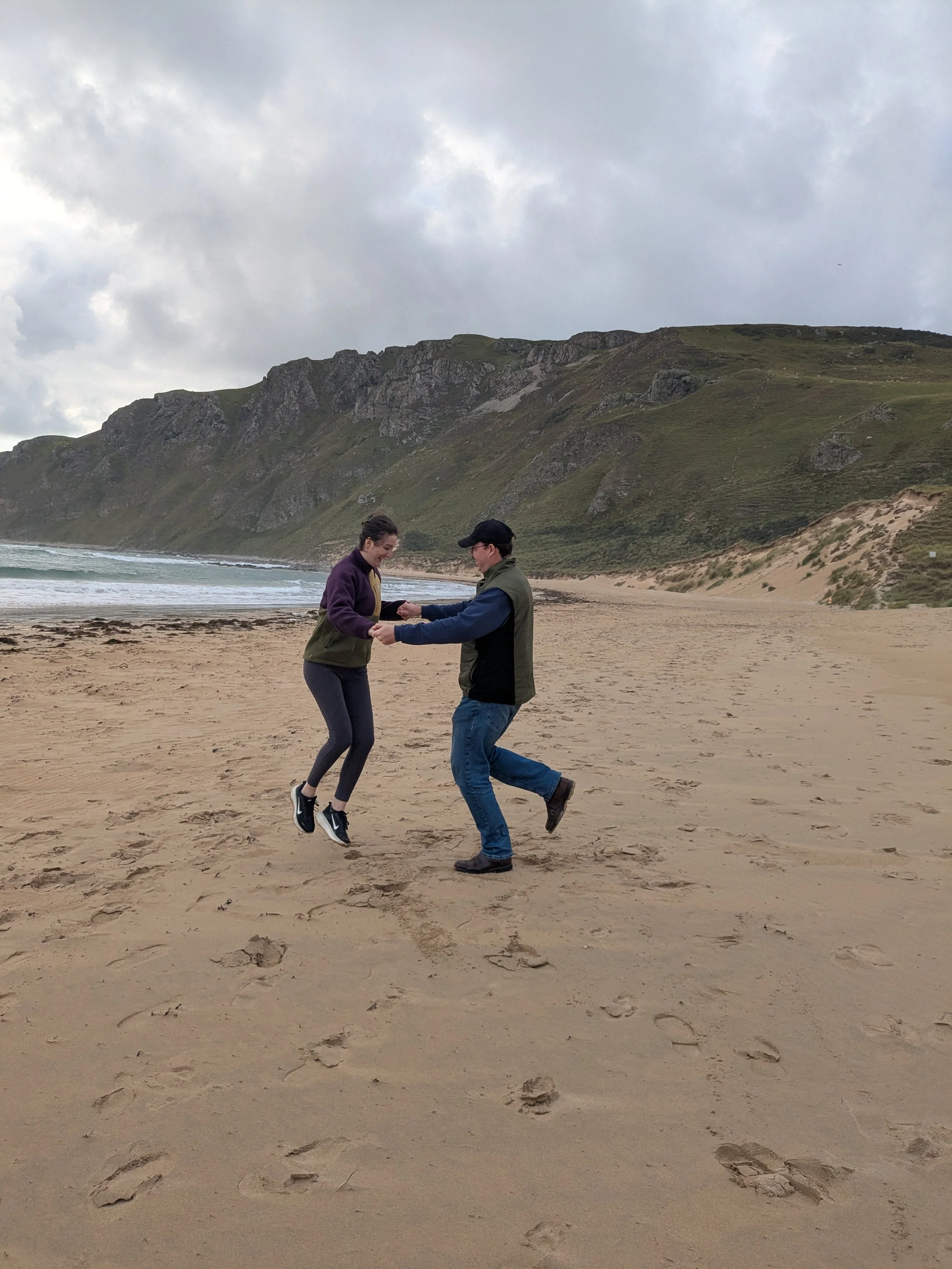
Once I revealed this mindset to Alex, he started to gently push back when I would apologise for genuine mistakes or attribute my mistakes to some flaw in my character:
If I dropped something and made a mess, I might say “I’m so sorry, I’m such an idiot. I need to pay more attention. If I was paying attention I wouldn’t have dropped it” (language of responsibility). He would meet my gaze and say “But it was an accident, right? You don’t need to apologise. You’re not flawed”.
If I said something that I later learned to be incorrect, I would say “I’m sorry that I lied” (language of responsibility). He would respond with, “But did you know that when we talked about this last time? You didn’t lie if you didn’t know”.
If I made a financial decision which proved to be unfavourable after the markets shifted, I would say “I’m sorry that I wasted our money. I’m so stupid” (language of responsibility). He would reply, “you’re not stupid, you made a decision based on the information that you had at the time. Things have just changed, but you couldn’t have known that would happen!”.
As time went on, he communicated this message more straightforwardly and just simply say: “What do we say when we make a mistake?” And through gritted teeth I would respond “oops”. We did this for years. I mean YEARS. Until “Oops!” became my natural response.
These changes really, truly helped me to disentangle my worth from my actions. These regular conversations helped me to first question whether I was holding myself to a reasonable standard. When I realised that I wasn’t, it became easier to find grace for myself.
And practicing breaking free from the language of responsibility with small scale things like video games, spilling water on the floor, or buying the wrong train ticket, helped me to do it with my bigger mistakes.
Buy In
Last summer, I put the “Oops!” method to the test when I made perhaps my most consequential mistake to date: missing a flight.
Alex and I had spent the weekend visiting friends in London. The friends who we were staying with weren’t home when we had to leave for the airport, so they left us with a set of keys and instructions to put it through the mail slot in their garden gate on our way out.
Before we left, I checked our room and made sure that we didn’t leave anything behind. I checked that I had my passport and residence permit. Then I sat on the stairs to tie my shoes, stood up, walked out the door, and dropped off the keys as instructed.

We took the overground to the nearest tube station and once I got on the tube, I couldn’t find my passport or residence permit in my backpack. We both remembered me checking for them before leaving the house. I talked through what I had done. I remembered placing them into the pocket of my leather jacket. But I didn’t have my jacket either. I had set it down at the bottom of the stairs where I sat to tie my shoes. I never picked it back up! I left my jacket, and most importantly, my immigration documents at our friends’ empty house.
After a few silent, panicky moments, we decided to get off the underground at the next stop and re-traced our journey back to our friends’ house. We had left ourselves a lot of time to get to the airport, so we thought that if we were able to get into the house quickly and retrieve the jacket, we might still be able to make our flight. The problem, you guessed it: we had dropped the keys in the mail slot.
Alex and I spent at least 20 minutes trying to fish the keys out of their small postbox by poking sticks through the mailslot and trying to hook them around the keychain to lift them out. Surprisingly, our efforts were for nought. When we finally admitted defeat, we texted our friends to explain the situation and essentially advised them that we were escalating our tactics and intended to climb over their stone garden wall to try to retrieve the keys.
Before we could finish the message about climbing over, they had already suggested it. So, Alex hoisted me up over the 8 foot stone wall, and I got the keys out of the letterbox in mere moments. I opened the door frantically, and there on the bottom of the stairs sat my leather jacket, with my immigration documents in the pocket. We grabbed the jacket and calculated the journey to the airport. By this time, at least 40 minutes had passed since we had first tried to retrieve the keys. We couldn’t make it. We missed a flight because I had made a mistake.
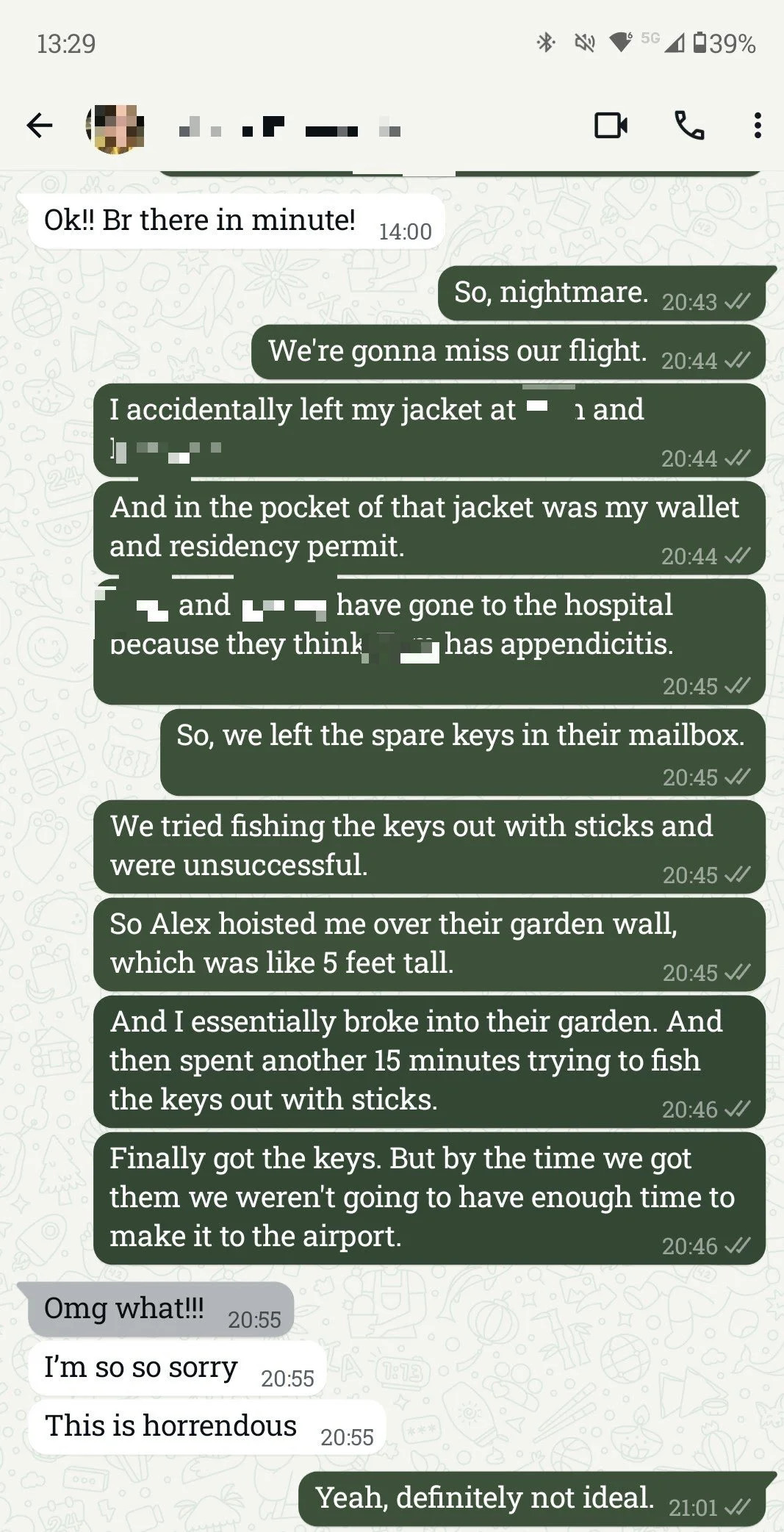
I was disappointed and frustrated, but because I had been disentangling my mistakes from my self worth and had been practicing responding to mistakes with “oops” for years, that was my instinctive response. It wasn’t about assigning blame or chastising myself. It was a mistake.
Because Alex also lives this way and adopts it as his instinctive response, our focus wasn’t on attributing blame, but on finding a solution. Of course we talked about how much it sucks, but our conversation wasn’t about me being forgetful or this being the constant pattern in our life, or how I need to learn to pay closer attention. It was a mistake. And even though it had significant financial and logistical consequences, we treated it with the same approach as if I had lost a life in Donkey Kong.
Perspective
Months ago, our family was really struggling. It felt like we were encountering challenge after challenge. Despite Ireland having the most summer sunshine it has had in the last half of a decade that we have been inhabitants, it felt like a pretty dark summer. One evening, Alex and I were making dinner after each spending a long day in the office. We were in a period of deep uncertainty and trying to keep things afloat in the midst of it.
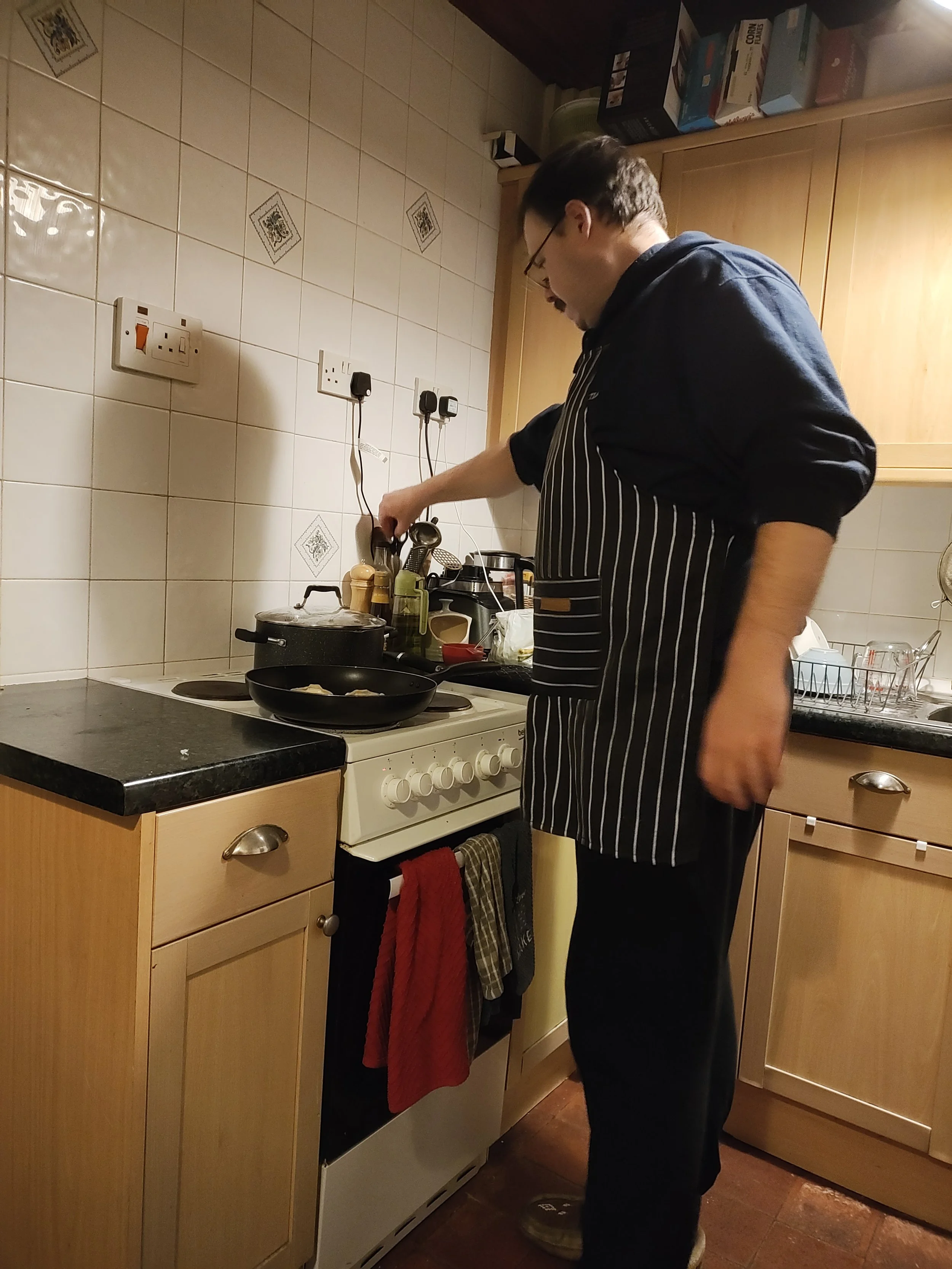
He had taken on responsibility for the salad that went along with dinner. He chopped up the cucumber with a chef’s knife. He then turned the blade of the knife horizontally and used it to lift the cucumber and convey it into the large salad bowl to his right. In the course of this process, a single piece of cucumber fell to the ground. In response, he blamed himself for using such an inefficient approach and said that he was stupid to have tried it.
I gently said to him, “you only dropped one piece. Look at how many made it into the bowl”. “So I’m not a failure?” he replied. He said it in jest, but we both knew that there was some truth to the underlying sentiment. A part of him was telling himself that his accidents or mistakes made him a failure in that moment. Just like a part of me tells me the same.
We’d been going through a difficult time. Alex, in particular, was under a lot of stress and building challenges made every little thing that didn’t go smoothly feel more consequential. In that moment, I had the perspective that he couldn’t have.
I saw the single piece of cucumber on the floor compared to the whole salad that he had prepared. And I asked him, was dropping the cucumber an accident? He nodded. And I said, what do we say when we do something by accident? “Oops!” He said, with a smile. And just like he’d taught me, I reminded him that we can exchange “Oops!” for that language of responsibility.